
Meta Description:
Snapdragon vs MediaTek in 2026: Compare performance, gaming, battery life, AI, camera, 5G and value to find the best smartphone processor for you.
Snapdragon vs MediaTek: Which Processor Is Better in 2026?
When buying a new smartphone, most people look at the camera, display, battery and design first. But if you want a phone that stays fast for years, handles demanding games, opens apps quickly and supports modern AI features, there is another specification you should pay close attention to: the processor.
Two names appear again and again in the Android smartphone market: Qualcomm Snapdragon and MediaTek Dimensity.
For a long time, Snapdragon had a strong reputation among Android enthusiasts, particularly for gaming and flagship smartphones. MediaTek, meanwhile, became well known for offering competitive performance at attractive prices.
But the processor market has changed.
In 2026, MediaTek's flagship Dimensity chips are no longer simply budget alternatives. The Dimensity 9500 competes directly with Qualcomm's flagship Snapdragon 8 Elite Gen 5, with both companies focusing heavily on CPU performance, graphics, AI, power efficiency and connectivity. Qualcomm's flagship uses a third-generation Oryon CPU, Adreno GPU and Hexagon NPU, while MediaTek's Dimensity 9500 uses a third-generation All Big Core design and a 3nm manufacturing process.
So, which one is better in 2026?
The honest answer is that there is no universal winner. The better choice depends on the exact chipset, the phone's cooling system, software optimization, battery, price and what you actually use your phone for.
Let's break down the differences.
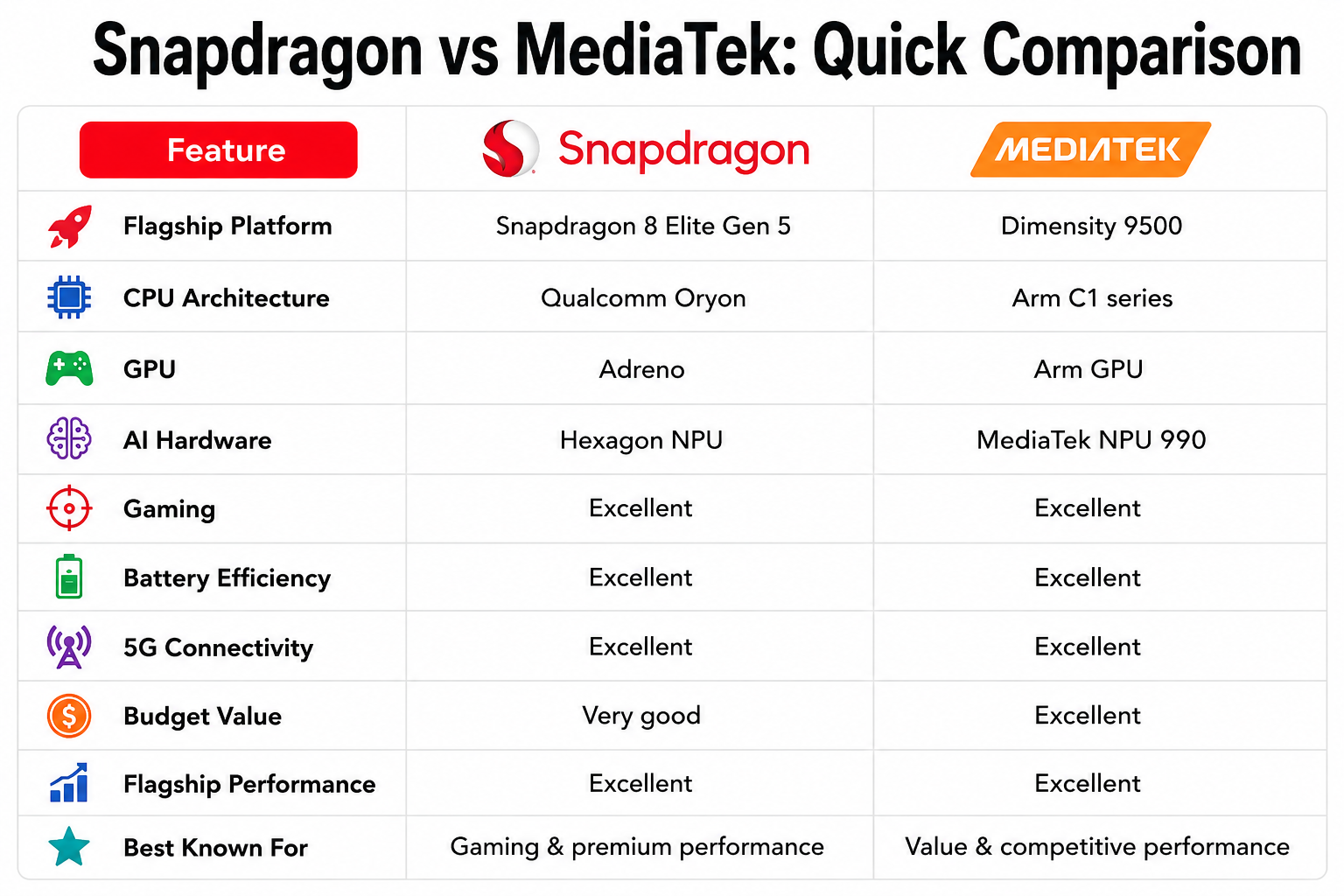
One important thing to remember is that Snapdragon and MediaTek are brands, not individual processors.
A flagship Snapdragon processor cannot fairly be compared with an entry-level MediaTek chip. When choosing a phone, always compare the exact processor models.
What Is a Snapdragon Processor?
Snapdragon is Qualcomm's family of mobile platforms used across smartphones and other connected devices.
The Snapdragon lineup covers a wide range of products, from affordable smartphones to premium flagship devices.
At the top of Qualcomm's current smartphone lineup is the Snapdragon 8 Elite Gen 5. It features Qualcomm's third-generation Oryon CPU, an Adreno GPU and Hexagon NPU. Qualcomm lists a maximum CPU clock speed of up to 4.74GHz for the platform and says its CPU delivers a 20% performance improvement and 35% better CPU power efficiency compared with the previous generation.
Snapdragon has also developed a particularly strong reputation among Android gamers. Its Adreno graphics platform, gaming technologies and long-standing presence in performance smartphones have helped make the Snapdragon name popular with enthusiasts.
However, Snapdragon isn't automatically better simply because a phone has the logo. Qualcomm makes processors at many different performance levels.
What Is a MediaTek Processor?
MediaTek is another major semiconductor company that designs processors for smartphones and other consumer devices.
For modern 5G smartphones, its main processor family is called Dimensity.
MediaTek has made significant progress in the premium smartphone market over the past few years. The Dimensity 9500 is a good example of this change.
The chip uses a third-generation All Big Core CPU architecture consisting of one Arm C1-Ultra core, three C1-Premium cores and four C1-Pro cores. It supports LPDDR5X memory and UFS 4.1 storage.
MediaTek says the Dimensity 9500 delivers up to 32% higher single-core performance and up to 17% higher multi-core performance than the previous Dimensity 9400. These are MediaTek's own comparison figures, so they should be treated as manufacturer claims rather than independent benchmark results.
The important takeaway is simple: MediaTek is now a serious competitor in the flagship processor market.
Snapdragon vs MediaTek: Performance
Performance is probably the first thing people think about when comparing processors.
A faster processor can make a phone feel more responsive when opening applications, switching between apps, editing videos or playing demanding games.
But processor performance isn't determined by clock speed alone.
The CPU architecture, number and type of cores, GPU, memory, storage and software optimization all contribute to the experience.
Snapdragon
The Snapdragon 8 Elite Gen 5 uses Qualcomm's third-generation Oryon CPU. Qualcomm says the CPU improves performance by 20% over the previous generation while also improving CPU power efficiency by 35%
MediaTek
The Dimensity 9500 uses MediaTek's third-generation All Big Core architecture. MediaTek reports up to 32% higher single-core performance and 17% higher multi-core performance compared with the Dimensity 9400.
In everyday use, both flagship processors are extremely powerful.
You are unlikely to notice a huge difference when doing normal tasks such as:
• Opening Instagram
• Browsing websites
• Watching YouTube
• Using WhatsApp
• Editing documents
• Switching between everyday apps
The difference becomes more relevant during heavy workloads such as gaming, video editing, AI processing and extended multitasking.
Winner: Too close to call
At the flagship level, both companies are producing extremely capable processors.
Snapdragon vs MediaTek for Gaming
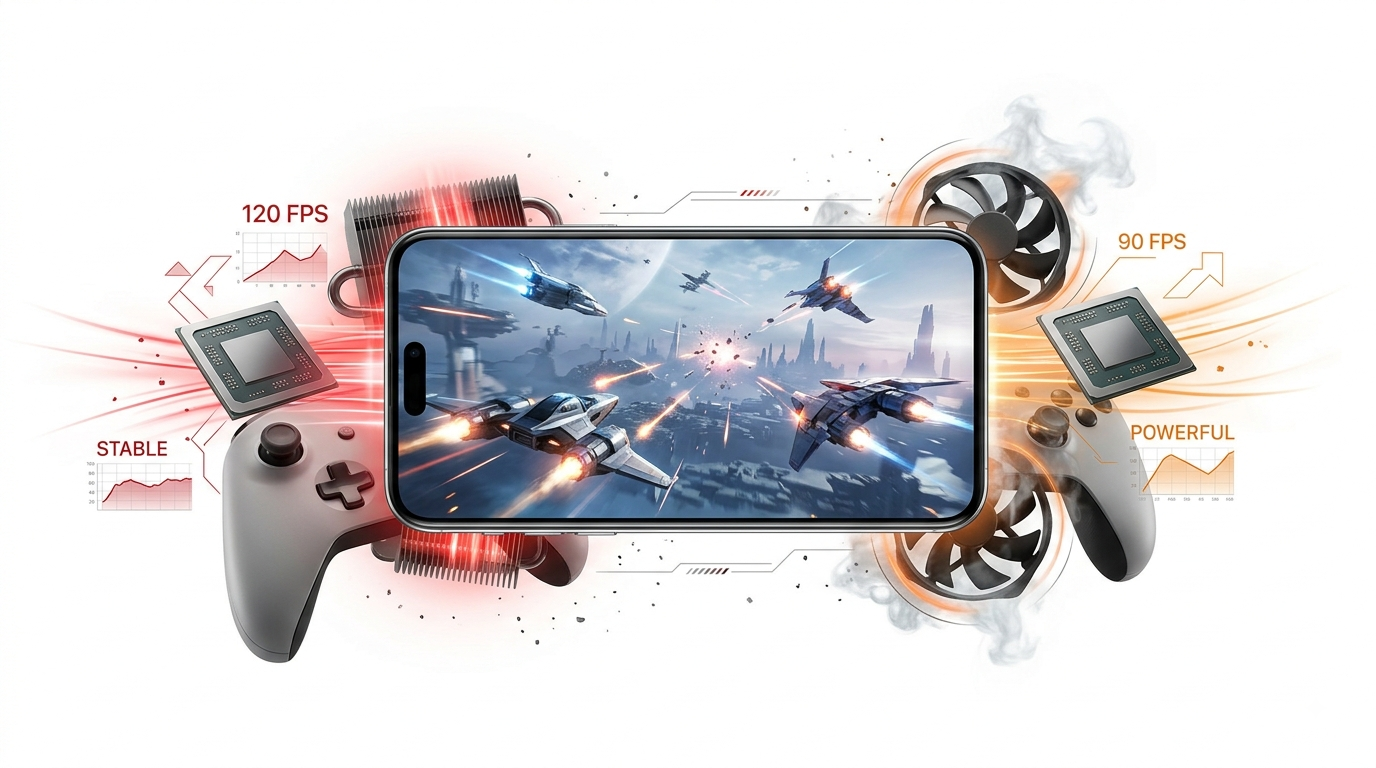
Gaming is where the Snapdragon vs MediaTek debate becomes particularly interesting.
A gaming processor needs more than a fast CPU. The GPU, cooling system, memory, display, software and sustained performance all matter.
Snapdragon has traditionally been a favorite among mobile gamers, partly because of the strong Adreno GPU ecosystem and broad optimization across Android games.
The Snapdragon 8 Elite Gen 5 features a new Adreno GPU. Qualcomm says it delivers a 23% improvement in graphics performance and 20% better GPU power efficiency compared with the previous generation. The platform also supports advanced gaming technologies, including hardware-accelerated ray tracing.
MediaTek has also made gaming a major focus.
The Dimensity 9500 uses an Arm GPU and supports advanced graphics technologies, including hardware ray tracing and modern game-engine features. MediaTek says the chip provides up to 33% higher peak GPU performance and up to 42% better GPU power efficiency than the previous generation. Again, these are manufacturer-provided comparisons.
Which is better for gaming?
For hardcore gamers, Snapdragon still has a slight overall advantage, particularly because of its mature gaming ecosystem and broad optimization.
However, the gap is much smaller than it used to be.
A well-cooled MediaTek phone can absolutely be an excellent gaming smartphone.
Winner: Snapdragon — slight advantage
Snapdragon vs MediaTek: Battery Efficiency
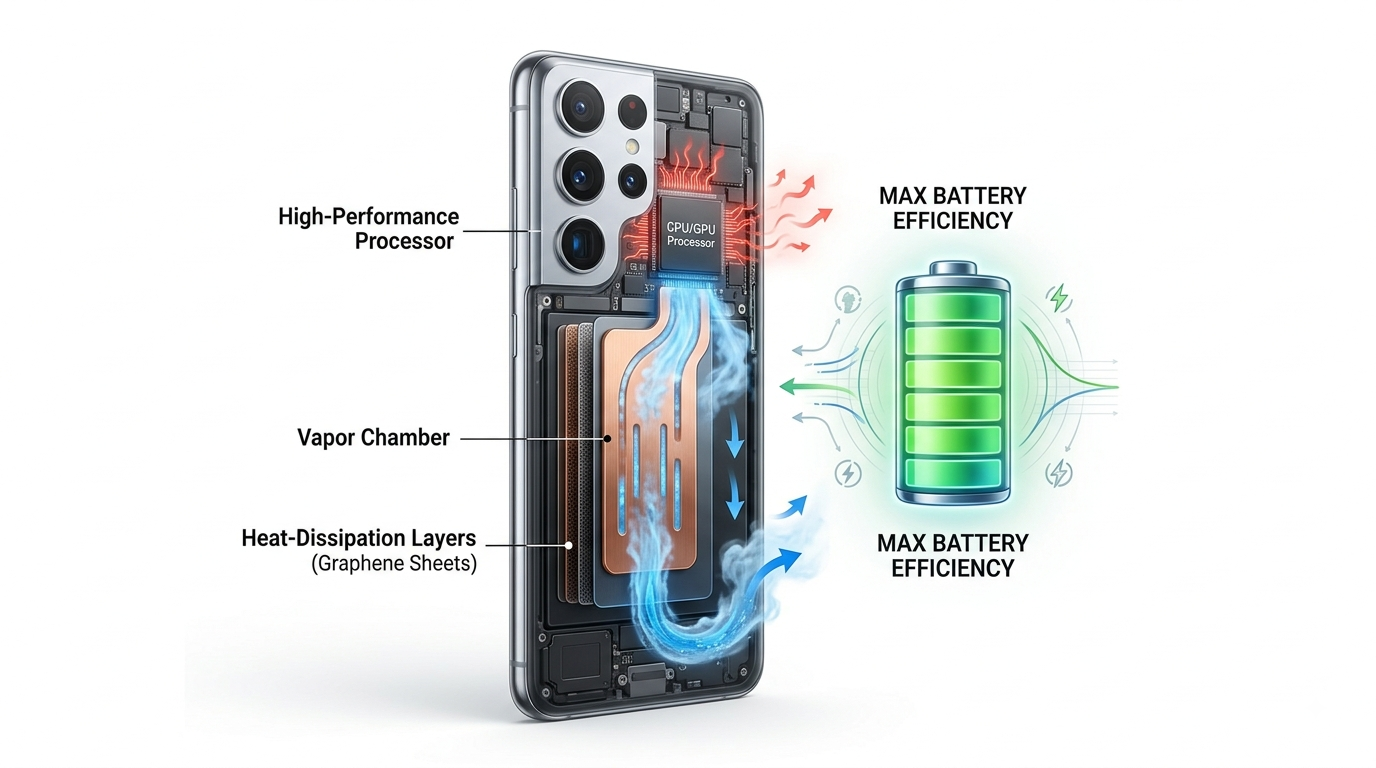
Nobody wants a powerful smartphone that needs to be charged several times a day.
Modern processors are therefore designed not only to be fast but also to use power efficiently.
The Snapdragon 8 Elite Gen 5 is manufactured using a 3nm process. Qualcomm says its CPU is 35% more power efficient and its GPU is 20% more power efficient compared with the previous generation. Qualcomm also claims 16% overall SoC power savings.
The Dimensity 9500 also uses 3nm technology. MediaTek says it can reduce CPU peak power by up to 37% and improve CPU power efficiency by up to 30% in certain scenarios compared with the previous generation.
However, processor efficiency is only part of the battery-life equation.
A phone's battery capacity, screen size, refresh rate, brightness, software and network connection can all affect how long it lasts.
For example, a phone with a 7,000mAh battery and an efficient mid-range processor could easily last longer than a flagship phone with a 5,000mAh battery.
Winner: Tie
Both companies have made major improvements in efficiency.
Snapdragon vs MediaTek: Heating and Thermal Performance
Heat is one of the biggest concerns for people who play games for long periods.
When a processor is under heavy load, it naturally produces heat. If the temperature becomes too high, the phone can reduce performance to control it. This is called thermal throttling.
This is why you should never judge gaming performance only by the processor name.
The phone's internal cooling system can make a huge difference.
A smartphone may use:
• Vapor chambers
• Graphite cooling layers
• Heat pipes
• Large thermal plates
• Gaming performance modes
A Snapdragon-powered phone with poor cooling can perform worse during a long gaming session than a well-cooled MediaTek phone.
The opposite is also true.
Recent real-world testing of Snapdragon-powered devices has highlighted an important point: peak benchmark performance doesn't necessarily translate into the best sustained performance if the phone's thermal design cannot handle the workload.
Winner: Depends on the phone
For long gaming sessions, look at the entire phone rather than just the chipset.
Snapdragon vs MediaTek for AI

AI is becoming one of the most important features in modern smartphones.
Today's processors are expected to handle much more than traditional CPU and GPU workloads.
AI can be used for:
• Photo editing
• Voice recognition
• Translation
• Generative AI
• Image generation
• Video enhancement
• Smart assistants
• Text summarization
• On-device recommendations
The Snapdragon 8 Elite Gen 5 includes Qualcomm's Hexagon NPU. Qualcomm says the new NPU delivers 37% faster AI performance compared with the previous generation.
MediaTek's Dimensity 9500 includes the NPU 990 and a Generative AI Engine. MediaTek says its new NPU provides major performance improvements over the previous generation and is designed for advanced on-device generative AI workloads.
This means both platforms are well prepared for the growing use of AI on smartphones.
Winner: Tie
But there's an important catch.
A phone having a powerful NPU doesn't guarantee that it will offer every AI feature.
The smartphone manufacturer decides which AI features are actually included and how they are implemented.
Snapdragon vs MediaTek: Camera Performance
The processor also has a major role in smartphone photography.
The camera sensor captures the raw information, but the processor helps transform that information into the final photo or video.
Modern smartphone processors handle:
• HDR
• Noise reduction
• Night photography
• Portrait effects
• AI image processing
• Video stabilization
• Computational photography
Snapdragon's flagship platform includes Qualcomm's imaging and AI technologies, while MediaTek's Dimensity 9500 includes its advanced Imagiq imaging system.
However, saying that one processor automatically produces better photos would be misleading.
Camera quality also depends on:
• Camera sensor
• Lens quality
• Optical stabilization
• Image tuning
• Camera software
• Manufacturer's processing algorithms
A phone with a slightly less powerful processor can still take better photos if it has better camera hardware and software.
Winner: Depends on the smartphone
Snapdragon vs MediaTek: 5G and Connectivity
Connectivity is another area where both companies have invested heavily.
The Snapdragon 8 Elite Gen 5 uses Qualcomm's X85 5G Modem-RF system and supports advanced 5G connectivity. Qualcomm lists peak theoretical download speeds of up to 12.5Gbps for the platform.
The Dimensity 9500 supports modern 5G technologies and includes support for advanced wireless connectivity. MediaTek lists 3GPP Release 17 support, 5G carrier aggregation and multiple cellular modes for the platform.
For everyday users, however, theoretical maximum speeds aren't the whole story.
Your real-world internet performance depends on:
• Mobile network
• Signal strength
• Network congestion
• Supported bands
• Location
• Carrier infrastructure
• Antenna design
Winner: Tie
Both are more than capable for modern 5G smartphones.
Snapdragon vs MediaTek for Budget Phones
This is one area where MediaTek has historically been particularly strong.
MediaTek has a huge presence in affordable and mid-range Android phones.
Its strategy has often been to bring features such as:
• 5G
• High refresh rates
• AI processing
• Good gaming performance
• Efficient CPU designs
to phones that cost less.
Qualcomm also offers Snapdragon processors across the budget and mid-range markets, so you should never assume that MediaTek is automatically better.
The better approach is to compare the exact chipsets.
For example, if you're buying a ₹15,000 smartphone, don't simply say:
“I want Snapdragon.”
Instead, compare the actual Snapdragon processor against the actual Dimensity processor in the phones you're considering.
Winner: MediaTek — slight value advantage
Snapdragon vs MediaTek for Mid-Range Phones
The ₹20,000–₹30,000 smartphone segment has become extremely competitive.
This is where buyers can often find phones with:
• Powerful processors
• AMOLED displays
• 120Hz refresh rates
• Large batteries
• Fast charging
• 5G
• Good cameras
Both Snapdragon and MediaTek have strong options in this category.
For a mid-range phone, I would recommend checking these specifications in order:
1. Exact processor
2. GPU
3. RAM
4. Storage technology
5. Cooling system
6. Display
7. Battery
8. Software
9. Price
This approach is much more useful than simply choosing between two processor brands.
Winner: Depends on the exact chipset
Snapdragon vs MediaTek for Long-Term Use
If you plan to keep your phone for three or four years, processor performance is important, but it isn't the only factor.
You should also consider:
• Android update policy
• Security updates
• Storage
• Battery health
• Software optimization
• Repairability
• Manufacturer support
A powerful processor won't make an old phone feel new forever if the manufacturer stops providing software updates.
Therefore, when buying a phone for long-term use, compare the phone manufacturer and update policy along with the processor.
Which Is Better for Gaming: Snapdragon or MediaTek?
If gaming is your top priority, Snapdragon is still the safer choice for many buyers.
Its Adreno GPU, gaming technologies and broad optimization give it an advantage in the gaming ecosystem.
But MediaTek has improved dramatically.
The Dimensity 9500 is built specifically to compete at the flagship level, with advanced GPU technology, AI processing and power efficiency.
So if you find a MediaTek-powered phone with:
• Excellent cooling
• High-refresh-rate display
• Good touch response
• Large battery
• Optimized gaming software
you shouldn't avoid it simply because it doesn't use Snapdragon.
Our pick: Snapdragon
For hardcore gaming, Snapdragon gets a slight edge.
Which Is Better for Battery Life?
There isn't a permanent winner.
Both companies have made efficiency a major focus of their latest flagship platforms.
The actual battery life of your phone will depend on much more than the processor.
If battery life matters most to you, look for a combination of:
Efficient processor + large battery + optimized software + efficient display.
Our pick: Tie
Which Is Better for AI?
Both Snapdragon and MediaTek have invested heavily in dedicated AI hardware.
Snapdragon uses the Hexagon NPU, while the Dimensity 9500 uses MediaTek's NPU 990.
If AI is important to you, don't simply choose based on the NPU specification.
Check which AI tools the actual smartphone supports.
Our pick: Tie
Snapdragon vs MediaTek: Pros and Cons
Snapdragon Pros
✓Excellent flagship performance
✓Strong gaming ecosystem
✓Powerful Adreno graphics
✓Excellent connectivity
✓Advanced AI capabilities
✓Broad Android device support
✓Strong reputation among gaming enthusiasts
Snapdragon Cons
×Premium Snapdragon phones can be expensive
×Not every Snapdragon processor is high-end
×Some mid-range Snapdragon chips can be outperformed by competing Dimensity chips
MediaTek Pros
✓Excellent value in many price segments
✓Strong mid-range processors
✓Highly competitive flagship performance
✓Good power efficiency
✓Strong AI capabilities
✓Advanced gaming technologies
✓Excellent 5G support
MediaTek Cons
×Gaming optimization can vary between phones
×Processor naming can be confusing
×Individual device cooling and software can make a large difference
Which Processor Should You Buy in 2026?
The right choice depends on what you need.
🎮 For Hardcore Gamers
Choose Snapdragon.
If gaming is your biggest priority, Snapdragon remains a strong choice because of its mature GPU ecosystem and broad game optimization.
💰 For Value Seekers
Consider MediaTek.
Don't pay extra for the Snapdragon name if a similarly priced Dimensity phone offers better overall hardware.
🔋 For Battery Life
Compare the complete phone.
Neither processor brand guarantees better battery life
🤖 For AI
Both are excellent.
Look at the AI features available on the specific smartphone.
📸 For Camera
Don't choose based on the processor alone.
Sensor quality, lenses and image processing are equally important.
🚀 For Flagship Performance
Both are excellent.
The Snapdragon 8 Elite Gen 5 and Dimensity 9500 are both designed for the premium smartphone segment.
Snapdragon vs MediaTek: Final Verdict
So, after comparing performance, gaming, battery efficiency, heating, AI, cameras, connectivity and value, which processor is better in 2026?
The answer is more complicated than it was a few years ago.
Snapdragon is still the safer recommendation for hardcore gamers and users who want a mature high-performance ecosystem.
Its latest Snapdragon 8 Elite Gen 5 combines Qualcomm's Oryon CPU, Adreno GPU and Hexagon NPU, and Qualcomm reports substantial improvements in performance and efficiency over the previous generation.
But MediaTek should no longer be considered a second-tier option.
The Dimensity 9500 demonstrates how competitive MediaTek has become. Its third-generation All Big Core CPU, 3nm process, modern GPU, NPU 990 and advanced connectivity make it a genuine flagship-class platform.
For budget and mid-range buyers, MediaTek can also offer excellent value.
The most important lesson is this:
Don't buy a smartphone just because it has Snapdragon or MediaTek. Buy it because the exact chipset and the complete phone fit your needs.
A powerful processor inside a poorly cooled phone may not perform well during long gaming sessions. Similarly, a slightly less powerful processor inside a well-optimized phone can provide a very good everyday experience.
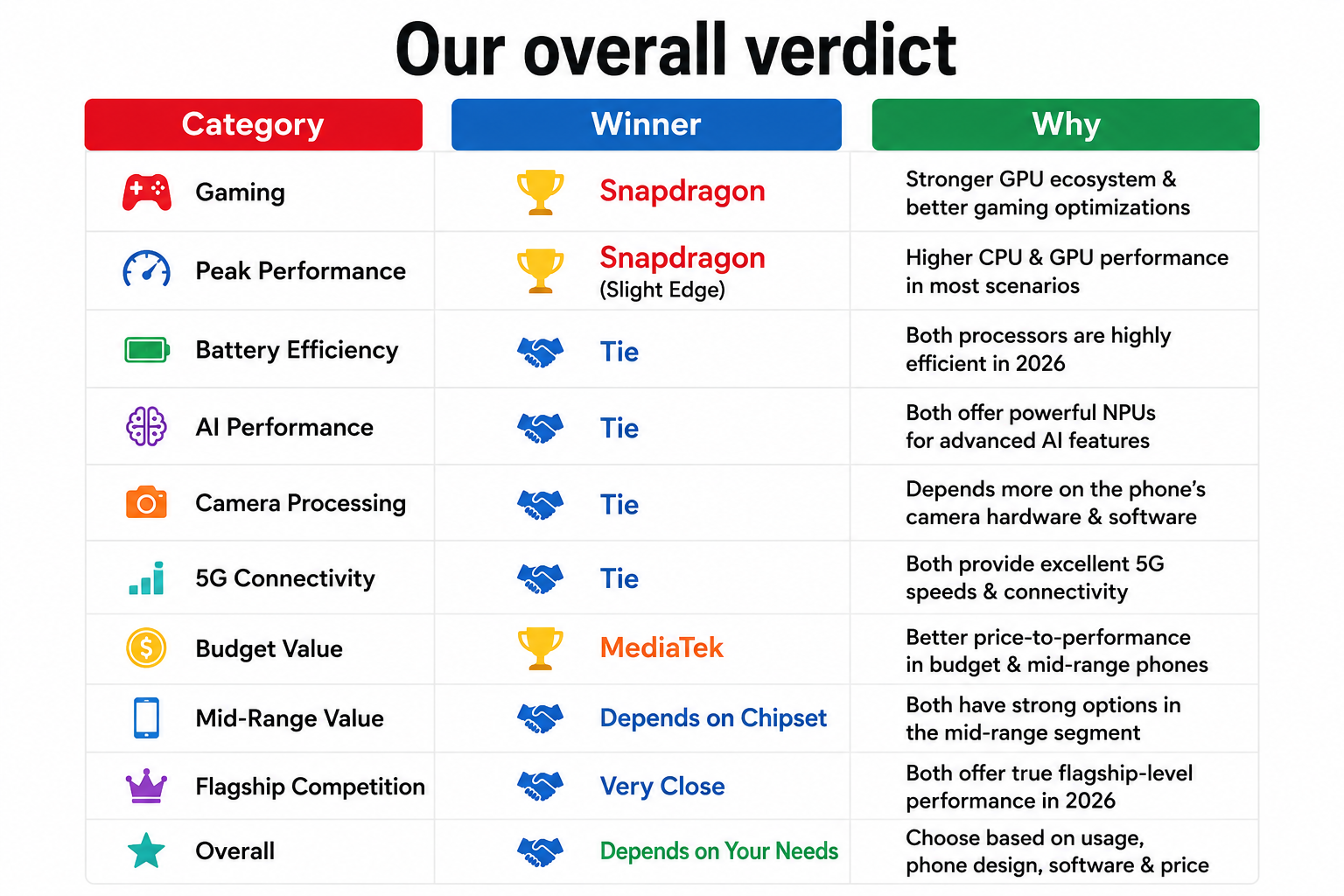
So, if you are a serious gamer, Snapdragon is still our first choice.
If you're looking for maximum value and find a smartphone with a powerful Dimensity processor, MediaTek can be an equally smart purchase.
In 2026, the old idea that “Snapdragon is always better than MediaTek” simply doesn't hold up anymore.